
The NoDa "Kura" Project
A Holistic Infrastructure Proposal for Community Food Security
Architectural Vision Concept
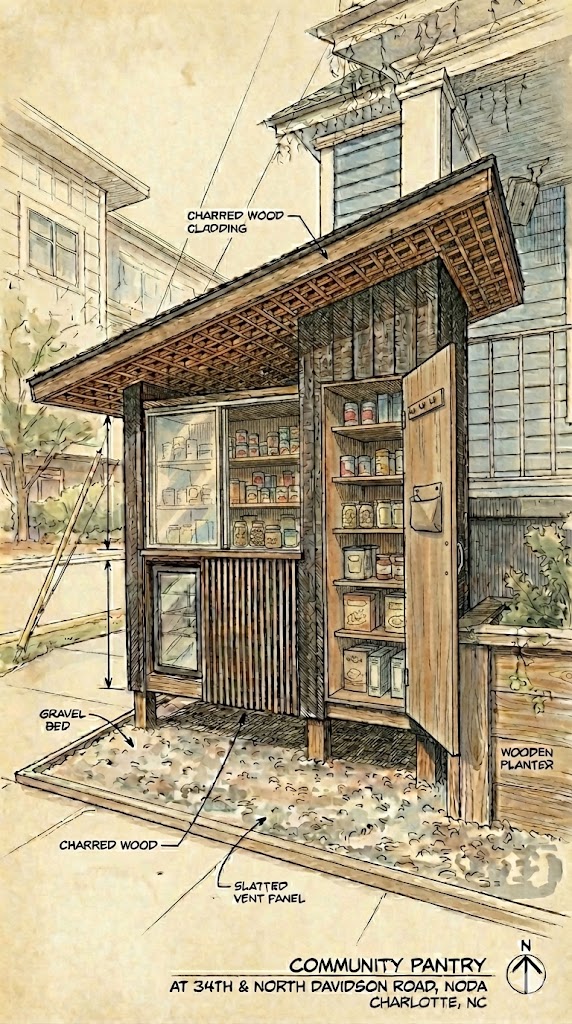
"Challenging Social Norms" by elevating community aid to high-design architecture.
The Holistic Context
Currently, we treat food security as a transactional problem. The Nomadic Design Philosophy views it as an ecosystem. We are moving from a "Brittle" system (exposed appliances, reactive repairs) to a "Resilient" stewardship model (passive cooling, durable materials).
Design Impact Analysis
Kura (Moss) vs. Current (Grey)
The Philosophy in Action
Weaving the product into the fabric of the community.
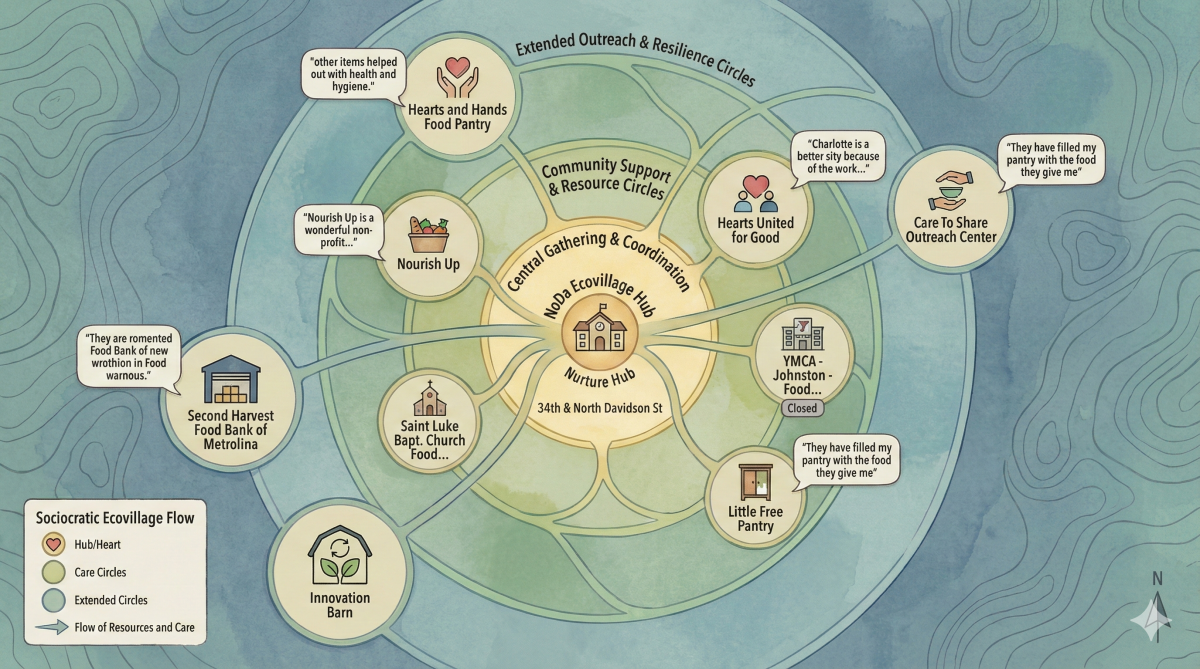
Holistic Perspective
Nature functions in wholes. We manage the interaction between the food, the sidewalk, the heat, and the dignity of the streetscape.
Resilience
Moving from "Brittle" appliances to "Resilient" passive systems.
Endineering
Yakisugi lasts 80+ years and returns to the earth safely.
Challenge Norms
We challenge the norm that aid must look "scrappy."
Empathy
Includes a "Tall Locker" for non-food items. Shifts experience from "transactional" to "participatory".
Stewardship
Low-tech maintenance allows decentralized stewardship.
Data-Driven Design
❄️ Passive Cooling Efficiency
📦 Volume Optimization
Construction Resources
Technical breakdown of the Airflow Engine and Japanese Joinery.
Thermodynamics: Stack Effect
- 01. Intake: Shaded gravel bed pre-cools air.
- 02. Rise: 1" rear gap creates thermal vacuum.
- 03. Exhaust: Koshi vents expel heat.
Kigumi: Japanese Joinery
- ✦ Mortise & Tenon:
Mechanical bond; no rusting fasteners. - ✦ Half-Lap Joint:
Flush bracing for Yakisugi cladding.